Shipping Condition
What Bare-Root Plants Look Like on Arrival
Real photographs from our own past imports, by genus. Orchidmart Inc. — Last updated 16 August 2026.
This page shows what you will actually unpack. How much root a bare-root plant keeps depends on the genus, not on how it was handled — so a Cattleya and a Cymbidium arrive looking completely different, and both are correct. For what the terms mean, see Terms and Explanations.
The BR scale
| Grade | Root condition on arrival |
|---|---|
| BR-1 | Good live roots, good leaves |
| BR-2 | Some live roots, good leaves |
| BR-3 | Few live roots — will need to regrow roots |
| BR-4 | No live roots — will need to regrow all roots |
| BR-5 | No live roots, and needs a recovery period before normal growth |
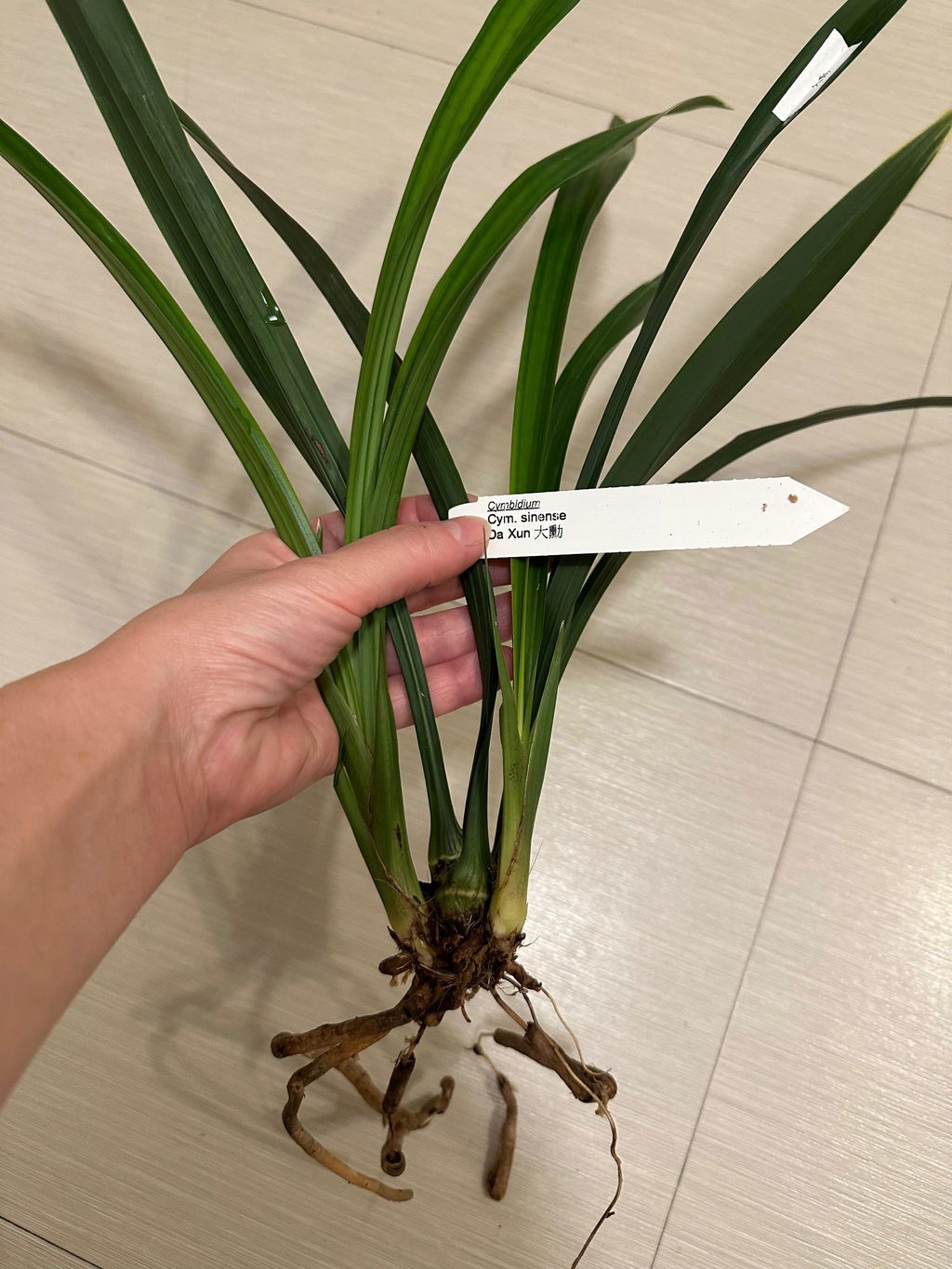
Cymbidium BR-1
Cymbidium travels well. Expect a substantial live root system and firm leaves. This is the best-case arrival condition, and the standard most people picture when they imagine a bare-root plant.


Phalaenopsis · Neofinetia BR-2
Some live roots remain and the leaves arrive in good order. Roots are usually trimmed back; a few will be dry. The plant re-establishes from what is left rather than starting over.


Cattleya BR-3 – BR-4
Cattleya roots do not survive bare-root transit and are cut back hard. A Cattleya arriving with few roots — or none — is normal and expected. The genus rebuilds its entire root system from each new growth, so it recovers from this position every season in cultivation anyway.


Dendrobium BR-3 – BR-4
Canes arrive firm; roots are trimmed hard. New roots come with the next growth.


Oncidium BR-3 – BR-4
Fine roots do not travel. Expect pseudobulbs in good condition and very little root.


Catasetum · Clowesetum BR-3 – BR-4
These genera are naturally deciduous and drop their roots in dormancy. A dormant-season import arriving as a bare pseudobulb with no roots at all is the plant behaving normally, not a damaged plant.

Paphiopedilum · Phragmipedium BR-3 – BR-4
Leaves arrive in good condition. Roots are reduced and these genera are slow to rebuild them — allow a full season before expecting visible growth.


A rootless plant is not a damaged plant. Judging a Cattleya by Cymbidium standards is the most common misunderstanding we see. Every plant on this page arrived in normal condition for its genus and was dispatched to a customer. Plants that fall outside our standard are pulled at inspection and refunded — they are never shipped. See our Return and Refund Policy §4.
Questions: info@orchidmart.ca
Orchidmart Inc. · Richmond Hill, Ontario