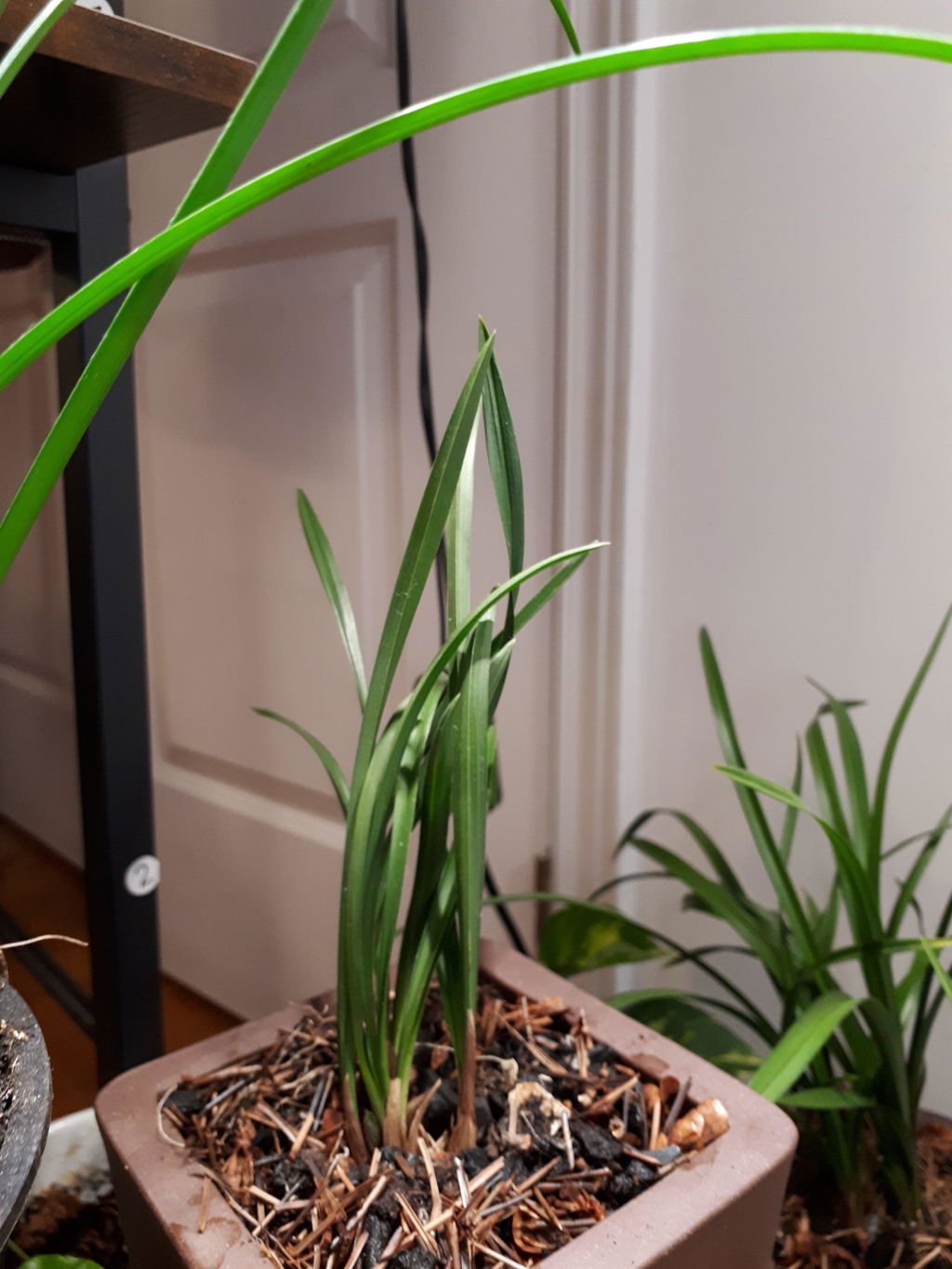
大花萬代蘭(藍萬代)養護指南
Vanda coerulea Griff. ex Lindl. — 萬代蘭屬單軸(單莖)附生蘭,俗稱「藍萬代」


精簡卡
Summary
| 月份 | 1 | 2 | 3 | 4 | 5 | 6 | 7 | 8 | 9 | 10 | 11 | 12 |
|---|---|---|---|---|---|---|---|---|---|---|---|---|
| 日溫°C | 16 | 18 | 20 | 21 | 22 | 24 | 24 | 24 | 24 | 24 | 21 | 18 |
| 夜溫°C | 6 | 8 | 11 | 14 | 16 | 19 | 20 | 19 | 19 | 16 | 11 | 7 |
William Griffith於1830年代在印度梅加拉亞的卡西丘陵採集到本種標本,1847年由Lindley正式發表命名。本種曾因早年被誤認僅侷限分布於卡西丘陵一帶而遭到大量採集(加上當地居民砍伐其附生寄主櫟樹燒製木炭,進一步破壞棲地),1979年因此被列入CITES附錄一這一最嚴格的保護等級;但隨後調查發現其實際分布範圍遠比最初認知廣泛(緬甸、泰國、中國雲南均有族群),加上印度與泰國族群已從過度採集中恢復,2005年國際公約將其降級回附錄二。坊間流傳本種是「史上第一種受法律保護的蘭花」,但本文查核後並未找到任何原始文獻支持這個「第一」的說法——可以確認的是,本種是印度《野生動物保護法》(1972年立法,1991年增訂植物附表)中明文列出保護的少數幾種植物之一,這個身分本身已經相當特殊,不需要再加上一個無法查證的頭銜。
植物本身並沒有獨立的「藍色色素」——藍紫色花朵的顏色,多半來自花青素(anthocyanin)家族中的飛燕草素(delphinidin)型色素,再搭配金屬離子、輔色素與細胞液酸鹼度等因素共同呈現。已有研究在萬代蘭屬雜交品種的花朵裡,分離出以飛燕草素為基礎、經醯化修飾的花青素成分,這類色素正與紫藍色花色有關——不過需要說明的是,這項化學分析研究的對象是萬代蘭屬的雜交品種,而非本篇介紹的原生種本身,但這些雜交品種的藍紫色基因,正是源自本種。
1931年登錄的經典雜交種 Vanda Rothschildiana(本種與 V. sanderiana 的雜交,確切誰是種子親本、誰是花粉親本並無定論),被英國皇家園藝學會譽為「所有藍花系萬代蘭雜交種中最受歡迎、最重要的一個」。根據RHS國際蘭花登錄資料庫查詢,以本種作為親本登錄的雜交種至少有75個之多(含跨屬雜交與一對天然雜交種),這還只是保守下限,並未計入更多後續世代的衍生品種——坊間常見「數百個雜交種」的說法目前查無明確出處,但本種作為藍色基因源頭、在萬代蘭系育種史上的份量,無庸置疑。
Vanda coerulea carries more baggage than most orchid species — a famous "blue" that's really violet-blue, a conservation story that's been simplified into legend, and a trade full of "improved" plants that may not even be the species anymore. This guide tries to sort fact from folklore.
A legend worth double-checking
British naturalist William Griffith collected this species in the Khasi Hills of Meghalaya, in what's now northeastern India, sometime in the 1830s. John Lindley formally described and published it in 1847, in Edwards's Botanical Register — not, as a common misattribution has it, in the Journal of the Horticultural Society. For much of the 19th and 20th centuries, the plant was assumed to grow nowhere else but those hills, and collector demand (plus the loss of its host oak trees to local charcoal production) drove heavy over-collection. By 1979, that perceived rarity was severe enough that CITES placed the species on Appendix I, its strictest protection tier, where it stayed for roughly the next 25 years. The story often gets told as "the first orchid ever legally protected," which has a nice ring to it, but this guide could not find a primary source backing up that specific "first" claim, so treat it as unverified folklore rather than fact. What actually happened next is more interesting anyway: later field surveys documented populations across Myanmar, Thailand and Yunnan, and found that Indian and Thai populations had recovered. In 2005, the Convention downlisted the species back to Appendix II — its protection status easing because the situation on the ground turned out to be better than first believed, not worse.
What the real habitat actually looks like
Skip the mental image of a shady, dripping rainforest. Vanda coerulea grows in open, often deciduous hill forest between roughly 900 and 1,500m, fastened high up — often 10 to 20 meters off the ground — on the exposed trunks of oaks and other sun-tolerant trees. Multiple independent sources describe the habitat as "exposed" and getting strong daylong sun; several of its host trees are deciduous, which likely means the plant gets even more direct light during the cooler, leafless months, though this guide did not find that link stated outright in any one source. That combination — bright exposure, elevation-cooled air, and good air movement through an open canopy — is the exact environment this guide's light and temperature recommendations are trying to recreate indoors, and it's also why a plant kept dim and still tends to sulk.
The cool-growing exception
Most Vanda species and hybrids are warmth-loving plants that do best kept consistently hot. Vanda coerulea is the documented exception: specialist sources point to winter nights of roughly 10–12°C, not below 10, to set flowers reliably, and report that flower quality actually improves in cooler months rather than suffering from it. This tracks with where the species actually grows: at its core range around Shillong, Meghalaya, winter nights routinely sit in the mid-single digits to low double digits Celsius in habitat — a genuinely different thermal world from the lowland tropics many people picture when they hear "Vanda," though a cultivated plant should still be kept at or above that 10°C cultivation floor rather than matched to the coldest wild extremes. Even this species' own entry in one widely used plant database gives a conservative safe minimum above 15°C — that's a sensible safety margin for a protected greenhouse setting, not a reflection of what the species actually tolerates in the wild, and it's a reminder that even a species-specific figure can be written for caution rather than for accuracy.
Light: the real ceiling, not the genus-generic one
Generic Vanda culture advice sometimes recommends extremely high light — 5,000 foot-candles or more, verging on full sun — aimed at warm-growing, terete-leaved hybrids built for tropical greenhouse conditions. Vanda coerulea, with its flatter strap-shaped leaves, does better with somewhat less: specialist growers and orchid societies converge on roughly 3,000 to 4,000 foot-candles (about 30,000–40,000 lux), bright but filtered, with protection from harsh midday or afternoon sun. Within that range, more light tends to deepen the blue-violet color; too little produces long, dark, floppy leaves that often simply refuse to rebloom.
No pot, no bark: how this plant actually grows
If your mental model of orchid culture is "a pot of bark chips," recalibrate for this one. The standard method for Vanda coerulea — like most true Vanda — is bare-root culture in an open, slatted wooden or plastic basket, hung so the roots dangle freely in the air with little or no medium around them. A few chunks of coarse bark or charcoal inside the basket are optional, mostly for humidity buffering, but a closed pot packed with fine bark mix is the wrong instinct here: roots that stay constantly damp in an enclosed space are exactly the setup that leads to rot in this genus.
Daily water, but never standing water
Because the roots are bare and exposed, active-growth watering is frequent — often daily in warm weather, once the roots have had a chance to dry between waterings. That's a real wet/dry cycle, not a constant soak: a popular retail presentation sells Vanda in a glass vase with roots sitting in standing water, which looks striking but is a poor long-term setup — prolonged immersion is a documented cause of root rot in this genus. In the cooler rest season, ease the frequency back, but never let bare roots go shriveled and dry; this plant has no leafless dormancy to fall back on.
Feeding roots that have nowhere to hide salt
With no potting medium buffering the roots, fertilizer salts build up fast if you're not careful. The standard approach is "weakly, weekly" — roughly a quarter to half the label strength about once a week through active growth — with plain water at other waterings to rinse accumulated salts off the bare roots. Cut back or stop feeding over the cooler rest period, when the plant isn't actively using the extra nutrients anyway.
A dry season you shouldn't skip
The native range has a pronounced monsoon pattern — rainfall peaks around June and July, then drops sharply through a much drier, cooler winter. That cooler, drier winter rest, paired with the temperatures discussed above, appears to support reliable flowering the following autumn, rather than triggering it directly — the dry season itself runs through winter, after the autumn bloom this guide's Bloom field describes. The nuance worth remembering: at the core of the range, winter is dry in rainfall but the air itself stays surprisingly humid (regularly 76–90% relative humidity even in the driest months, thanks to fog and dew) — so the cultivation takeaway isn't "let the air go dry," it's "water less often, but don't let ambient humidity collapse along with it."
Violet-blue, "improved" lines, and what you're actually buying
The checkered, tessellated venation on the petals is the species' calling card, and wild-type flowers show a distinctive twist — the petals rotate roughly 180° so their backs face forward, with deeply notched, sharply pointed side-lobes on the lip. Heavily line-bred "improved" Thai plants, prized in trade for larger, flatter, more boldly checkered flowers, often lack these wild-type features entirely — and DNA testing by orchid specialists has found that some of these especially showy, vividly colored lines are not pure Vanda coerulea at all, but hybrids sold under the species name. None of this is a reason for alarm; named color forms and selected lines are a normal part of orchid horticulture. It's simply a reason to ask a seller about parentage when a plant looks unusually large, flat, or vividly colored for the species — particularly for colors like pink, which isn't a well-documented wild-type coloring for this species in the literature this guide consulted.
Why growers put up with the demands
This is not an easy beginner orchid, and it's honest to say so upfront: the combination of high light, daily watering of bare roots, strong air movement, and a real cool winter requirement asks more of a grower — especially one growing indoors in a temperate climate — than most houseplant orchids do. What it offers in return is a flower color that's genuinely uncommon among orchids, a long-lived bloom that can last weeks to months, and a direct genetic line to nearly a century of blue-flowered Vanda breeding, Vanda Rothschildiana included. Scent was never really the point here — color was, and still is.
大花萬代蘭背負的故事,比大多數蘭花物種都多——一個其實偏紫、而非純藍的「藍」,一段被簡化成傳說的保育史,以及一個「改良型」商業栽培品可能已經不是純種的血統問題。這篇長文試著把事實從傳說裡分開來講。
一個查無實據的「第一」頭銜
英國博物學家 William Griffith 於1830年代在印度東北部梅加拉亞的卡西丘陵採集到本種標本,1847年由 John Lindley 正式發表於《Edwards's Botanical Register》——不是坊間常誤植的《園藝學會期刊》。十九、二十世紀大半時間,人們以為這個物種只生長在卡西丘陵這一帶,歐美藏家的採集需求(加上當地居民砍伐其附生寄主櫟樹燒製木炭)導致過度採集。到1979年,這種「稀有」的印象嚴重到讓CITES把本種列入保護等級最嚴格的附錄一——通常只有真正面臨貿易滅絕風險的物種才會被列到這一級。這段故事常被講成「史上第一種受法律保護的蘭花」,聽起來很動人,但本文查核後並未找到任何原始文獻支持這個「第一」的說法,應當視為未經證實的坊間傳說,而非事實。後續發生的事其實更有意思:之後的野外調查在緬甸、泰國、雲南都找到了先前沒被好好清點過的族群,也證實印度與泰國的族群確實已經恢復。2005年,公約把本種降級回附錄二——這是植物保護等級因「實際情況比最初認知更好」而放寬、而非收緊的少見案例。
真實棲地:不是陰濕雨林
本種生長在海拔約900–1500公尺之間開闊、常為落葉性的山地疏林,附生在離地10–20公尺高、暴露在外的櫟樹等喬木主幹上。多方獨立資料都描述其棲地「暴露」且日照充足;部分寄主喬木還會季節性落葉,這很可能意味著涼季時植株反而接收到更多直射陽光——不過本文並未找到任何單一來源明確寫出這個關聯,屬合理推論而非直接引述。這種「強光曝曬+海拔降溫+林冠通風良好」的組合,正是本文光照與溫度建議試圖在室內重現的環境,也是為什麼悶暗少風的栽培環境容易養不好這一種的原因。
萬代蘭屬中少見偏涼的例外
多數萬代蘭屬物種與雜交種都喜歡持續溫暖的環境,但本種是公認的例外:專業資料多指出本種需要約10–12°C、不低於10°C的冬夜才能穩定開花,而且花況在涼季反而會更好,而非受損。這與本種實際的原生環境吻合:在核心分布地梅加拉亞雪隆一帶,野外冬夜氣溫平均常落在約6–8°C左右,跟許多人聽到「萬代蘭」就聯想到的低地熱帶環境完全不同——但栽培植株仍建議維持在10°C以上的下限,不必也不應該比照野外最冷的極端值。值得一提的是,就連某個常被查閱的植物資料庫裡本種自己的條目,也把安全下限訂在15°C以上——這對溫室栽培而言是合理的保守安全邊際,但並不反映本種在野外真正能承受的溫度;這也提醒我們,即使是物種專屬的數字,有時寫的也是「保守安全」而非「真實耐受範圍」。
光照:真正的上限,不是屬級通用值
通用的萬代蘭屬養護建議有時會建議極高光照(5,000尺燭光以上,接近全日照),但那是針對耐熱、圓柱葉型、適合熱帶溫室環境的雜交種。本種葉片較扁平,光照需求略低:專業栽培者與蘭花協會的共識落在約3,000–4,000尺燭光(約30,000–40,000 lux),明亮但經過過濾,避開正午或午後強烈直射。在這個範圍內,光線愈強,花色通常愈深;光照不足則容易長出偏長、下垂、發暗的葉片,且往往難以再度開花。
沒有盆,也沒有樹皮:真實的種植方式
如果你對蘭花栽培的既定印象是「一盆樹皮屑」,這一種請重新校正認知。本種(如同大多數真正的萬代蘭)慣用做法是裸根種植,懸掛在有孔洞的木條或塑膠條板吊籃中,讓根系自由垂掛在空氣裡,幾乎不用介質包覆。籃內可視需要墊少量粗顆粒樹皮或木炭輔助保濕,但密閉盆器搭配細顆粒介質是錯誤的直覺——根系長期悶在密閉潮濕的空間裡,正是本屬植物最容易爛根的情境。
每日澆水,但絕不能積水
因為根系裸露在外,生長旺季的澆水頻率很高——溫暖月份常需每日澆水,前提是根系已有機會在兩次澆水之間變乾。這是真正的乾濕循環,不是持續浸泡:零售市場常見把萬代蘭插在玻璃花瓶、根系泡在水裡展示的作法雖然好看,但長期而言並非理想做法——長時間浸泡是本屬植物爛根的常見原因之一。涼季緩休期可降低澆水頻率,但絕不能讓裸根乾癟——本種沒有落葉休眠可以依賴。
施肥:根系無處藏鹽
由於沒有介質緩衝根系,肥鹽如果不留意會快速累積。標準做法是「薄肥勤施」——生長季約每週一次施用建議濃度1/4至1/2的肥料,其餘澆水則用清水沖洗裸根,洗掉累積的鹽分。涼季緩休期則減少或暫停施肥,此時植株本來也用不到額外的養分。
不該跳過的旱季
原生地有明顯的季風型氣候——雨量約在6、7月達到高峰,隨後明顯轉乾、轉涼,進入冬季。這段涼爽偏乾的冬季緩休期,搭配前述的氣溫條件,似乎有助於誘導隔年秋季穩定開花,而非直接觸發開花——乾季本身落在冬季,是在秋季開花「之後」才展開的。值得留意的細節是:在核心分布區,冬季雖然雨量稀少,但空氣本身的濕度卻意外偏高(即使在最乾的月份,相對濕度仍經常維持在76–90%左右,靠的是霧氣與露水)——換句話說,養護上該做的不是「讓空氣變乾」,而是「降低澆水頻率,但不要讓環境濕度跟著一起崩掉」。
紫藍花色、「改良型」血統,與你買到的到底是什麼
花瓣上棋盤格狀的網紋是本種的招牌特徵,野生型的花朵還有一個明顯特徵:花瓣會扭轉約180度、讓背面朝向正面,唇瓣側裂片則有明顯的深缺刻與銳利尖角。經過大量選育的泰國「改良型」商業栽培品,雖然以花型更碩大、更扁平、網紋更鮮明而受市場青睞,卻往往完全不具備這些野生型特徵——而蘭花專家以DNA鑑定更發現,部分這類色彩特別濃豔的改良血統,其實根本不是純種的大花萬代蘭,而是掛著物種之名販售的雜交種。這並不是什麼需要恐慌的事——具名色型與選育品系本來就是蘭花園藝的正常一部分。這只是提醒:當一株植物的花型明顯比一般描述更碩大、更扁平、花色更鮮豔時,值得向賣家詢問血統來源,尤其是粉紅色這類花色——在本文查核的文獻裡,並沒有可靠證據支持粉紅色是本種有紀錄的野生型花色。
為什麼栽培者願意承擔這些要求
坦白說,這不是一株適合新手的入門蘭花:高光照、裸根每日澆水、良好空氣流通,再加上真正需要的涼爽冬季——這些要求,尤其對在溫帶氣候室內栽培的人來說,比一般居家蘭花更高。但作為回報,它呈現的花色在蘭科植物裡相當罕見,花朵壽命長達數週甚至數月,而且血統直接連結近一個世紀的藍花系萬代蘭育種史,包括經典的 Vanda Rothschildiana。香氣從來不是這一種的重點——顏色才是,現在依然是。
Vanda coerulea Care Sheet
Griff. ex Lindl. — the "Blue Vanda," a monopodial epiphytic species
精簡卡
Summary
| Mo. | 1 | 2 | 3 | 4 | 5 | 6 | 7 | 8 | 9 | 10 | 11 | 12 |
|---|---|---|---|---|---|---|---|---|---|---|---|---|
| Day°C | 16 | 18 | 20 | 21 | 22 | 24 | 24 | 24 | 24 | 24 | 21 | 18 |
| Night°C | 6 | 8 | 11 | 14 | 16 | 19 | 20 | 19 | 19 | 16 | 11 | 7 |
William Griffith collected material of this species in the Khasi Hills of Meghalaya, NE India, in the 1830s; John Lindley formally described it in 1847. Early on, the species was mistakenly thought to be confined to the Khasi Hills alone, leading to heavy over-collection (compounded by local felling of its host oak trees for charcoal) and a 1979 uplisting to CITES Appendix I, the Convention's strictest tier. Later surveys found its real range was far broader — Myanmar, Thailand and Yunnan all held populations — and that Indian and Thai populations had recovered from past over-exploitation, leading to a 2005 downlisting back to Appendix II. A popular story claims it was "the first orchid ever legally protected" — this guide's research turned up no primary source supporting that "first" claim. What's actually documented is notable enough on its own: it's one of only a handful of plants specifically named for protection in the plant schedule added in 1991 to India's Wild Life (Protection) Act 1972.
Plants don't have a dedicated "blue pigment" — violet-blue flower color mostly comes from delphinidin-type anthocyanins, combined with metal ions, co-pigments and vacuolar pH. Researchers have isolated acylated, delphinidin-based anthocyanin pigments from Vanda hybrid flowers that are specifically linked to violet-blue coloring — worth noting that this particular chemical analysis was done on Vanda hybrid cultivars rather than the wild species covered here, but those hybrids' blue-violet genetics trace directly back to this species.
Vanda Rothschildiana, a cross of this species with V. sanderiana registered in 1931 (the exact seed/pollen parent direction isn't confirmed), is described by the RHS as "the most popular and important in all blue-flowered hybrids." A direct query of the RHS International Orchid Register shows at least 75 hybrids registered with this species as a parent (including intergeneric crosses and a couple of natural hybrids) — and that's only a conservative lower bound on direct offspring, before counting later generations. The commonly repeated "hundreds of hybrids" figure has no clear citation this guide could find, but there's no doubt about this species' outsized role as the genetic source of blue in Vanda breeding.